Plating is a finish, not solid gold; done right, it’s indistinguishable. The difference is discipline: a build validated by XRF, and on Rolex a colour set against genuine Rolex by measurement, not by guesswork.
Full disassembly, then a multi-stage clean: two manual cleaning procedures with purpose-made watch cleaning fluid, ultrasonic isopropyl, electro-clean, and electrolytic surface activation, so the deposit bonds to bare, active metal. Most plating failures start here; this is where the time goes.
A layered build: strike, barrier, then cobalt-hardened hard-gold on the wearing surfaces, finished to your chosen colour (18K 2N default; 14K and 24K tones on request), to a 5 µm standard verified by independent XRF.
For Rolex, colour is measured against modern genuine Rolex in CIELAB under standardized D65 illumination. Every piece, matched or not, clears a finish-quality gate before it moves on.
Final inspection, reassembly, and a final QC pass. Tracked return shipping.
14K / 18K / 24K yellow gold, White Gold style, two-tone.
02Satin nano-ceramic that keeps the gold feel; gloss & microfilm too.
03Silk bracelet PTFE injection, rotor oiling, waterproofing with video proof.
04Chamfering, bezels, crystals, dials, crowns, up to full builds.
05Timing, water resistance, material ID, plating verification.
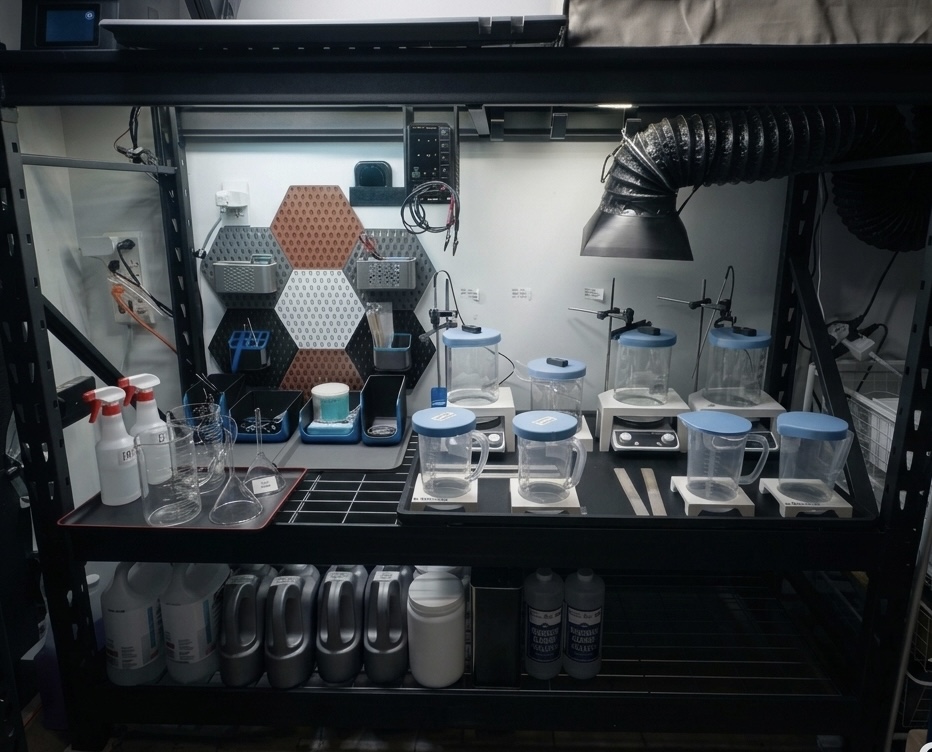
All work is carried out in a dedicated, instrumented plating laboratory rather than the kitchen counter that is so common in the industry. Bath fluid agitation, current density, plating time, part orientation, and well over 50 other variables are strictly controlled for each process, while solution condition and contamination are monitored to maintain consistent deposition. Parts move through defined cleaning, activation, plating, and filtered-rinse stages designed to protect adhesion, colour, and surface finish. Colour is evaluated under standardized D65 illumination rather than ordinary room light, allowing tone, brightness, and consistency to be compared accurately between parts and production runs. Coating thickness, surface hardness, adhesion, and wear resistance are also checked on a dedicated test bench, with process samples used where destructive testing would not be appropriate on the finished component. Technical elements are measured and controlled rather than assumed.
Tour the lab →Thickness is controlled by charge: current density and time per surface area. The process is validated quarterly by independent XRF at an accredited lab. Hardness is not a number quoted at you. The cobalt-hardened gold runs about 200 Knoop over a palladium underlayer near 400 Knoop, and you can watch it proven on the bench: a driver dragged across the surface, acrylic glue pulled off it, and 3M tape lifted from it, all on camera. On Rolex, the colour is matched to modern genuine 2N, documented to ΔE < 1.0. What you get is a finish built to a standard you can be shown, not just told.
What makes a good plate →A $25 deposit holds your place on the waitlist. When you’re up, a 50% deposit starts the work; balance on completion, before tracked return shipping.